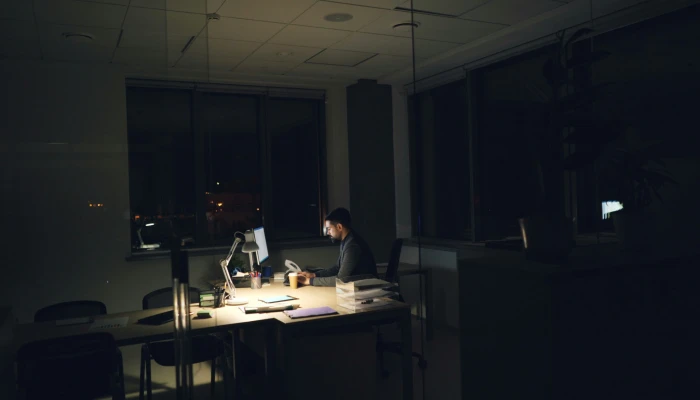
When work doesn’t pause but school does: the burnout pressure leaders often miss
There are certain points in the year when workplace pressure becomes more predictable than exceptional. School holidays are one of them.
For many working parents, these periods are not a break. They are a redistribution of pressure. The logistical load increases. The emotional load increases. The amount of invisible planning increases. And yet, in many organisations, the work itself remains exactly the same.
What changes is not the formal workload, at least not on paper. What changes is the number of competing demands people are carrying while trying to maintain the same level of output, responsiveness and professionalism. That is where this becomes less of a personal challenge and more of a workplace one.
What is often missed in organisational conversations about burnout is that it rarely appears suddenly. It tends to build at predictable pressure points, when sustained demands begin to outstrip recovery, flexibility and support. School holidays are one of those points, particularly for working parents trying to hold together childcare, work expectations, family dynamics and their own mental bandwidth all at once.
The data reflects that this is not a marginal issue. In the UK, Bright Horizons’ 2025 Work+Family Snapshot found that 64% of employees had experienced a childcare breakdown that clashed with work, while 53% of women said they carry the mental load for parenting in their household. The report also includes a telling reflection from one respondent: “School holidays are very long. I don’t have enough annual leave to cover these.” In Australia, research from The Parenthood found that 74% of women and 47% of men reported feeling stressed balancing work and family commitments, while 28% of working parents and carers said they had considered leaving their job because of the difficulty of combining work with caring responsibilities.
64% of employees experienced a childcare breakdown that clashed with work in the UK.
What matters here is not just that the period is stressful. It is how that stress behaves.
When pressure increases in ways that feel difficult to name, easy to minimise and hard to formally accommodate, people often compensate quietly. They work later. They compress breaks. They absorb more than they can sustain. They become more reactive, less patient, less cognitively flexible. In some cases, they start using annual leave not for recovery, but simply to make logistics work. In the UK, a 2025 survey reported that 26% of parents expected to take unpaid leave over the summer holidays to cover childcare. That is not time off. It is pressure being shifted from one part of life to another.
This is one of the reasons burnout can be easy to misread. Organisations often interpret it as an issue of individual resilience, time management or coping skills. But periods like school holidays reveal something more structural. They show us where organisational flexibility is real and where it is mostly rhetorical. They show us whether managers know how to respond to fluctuating capacity without defaulting to judgement. They show us whether workload expectations can flex when life circumstances intensify, or whether support is limited to sympathetic language without any meaningful adjustment.
There is also a more subtle dynamic at play. For many working parents, especially women, the pressure of school holidays is not only practical but cognitive. It is the constant requirement to monitor, anticipate and coordinate. The summer or Easter break is not simply “more to do”; it is more to keep track of. More transitions. More contingency planning. More decisions. More emotional management. Bright Horizons’ 2025 snapshot suggests this mental load remains heavily gendered, with women significantly more likely to report carrying the parenting load in their household.
74% of women in Australia report feeling stressed balancing work and family commitments.
That matters because burnout is not just about hours worked. It is also about how much internal regulation a person is having to do while continuing to function outwardly. The person who appears to be coping may, in practice, be using an extraordinary amount of energy simply to remain composed, present and productive.
This is where leaders often underestimate the organisational role. Many respond to school holiday pressure by encouraging flexibility, which is important, but not always sufficient. Flexibility without workload adjustment can simply move the strain around. The calendar changes, the Teams status changes, the hours become less visible — but the pressure remains.
A more useful question for leaders is not, “Have we offered flexibility?” It is, “What assumptions are we still making about capacity?”
That distinction matters. Because if the work does not change, the deadlines do not move, and the responsiveness expectations remain intact, then what is being offered is not relief. It is permission to manage the same pressure in a different location.
In practice, the organisations that support working parents well during pressure periods tend to do a few things differently.
They anticipate these periods rather than reacting to them. They normalise explicit conversations about capacity. They adjust expectations where needed, rather than relying on people to quietly absorb the gap. They equip leaders to notice early signs of overload, not just visible underperformance. And they understand that support is not simply about being empathetic in the moment. It is about creating conditions that reduce the likelihood of people tipping into chronic strain.
There is also a wider cultural question here. If an organisation consistently treats pressures like school holidays as private problems to be solved individually, it sends a message about what kinds of strain are seen as legitimate. It reinforces the idea that people should keep performing as normal regardless of context, and that if they cannot, the issue sits with them. Over time, that does not just increase exhaustion. It reduces trust.
This is where periods like Easter in the UK, or the lead-in to term changes in Australia, become more than seasonal inconveniences. They are organisational stress tests. They reveal how much space there really is for people to be human at work, especially when work and life become temporarily harder to separate.
The challenge for leaders is not to remove pressure entirely. That is rarely possible. The challenge is to stop treating predictable pressure points as though they are surprising, individual or irrelevant to performance. They are none of those things.
A KPMG US survey found 76% of working parents said becoming a parent had increased their motivation at work
If anything, they are some of the clearest indicators of whether an organisation understands burnout as a systems issue rather than simply a personal one. Because when work doesn’t pause but school does, the real question is not whether parents are feeling the strain. It is whether the organisation has noticed, and what it chooses to do with that knowledge.
If your organisation is looking to better support people through periods of sustained pressure, Enmasse can help. Contact us today.